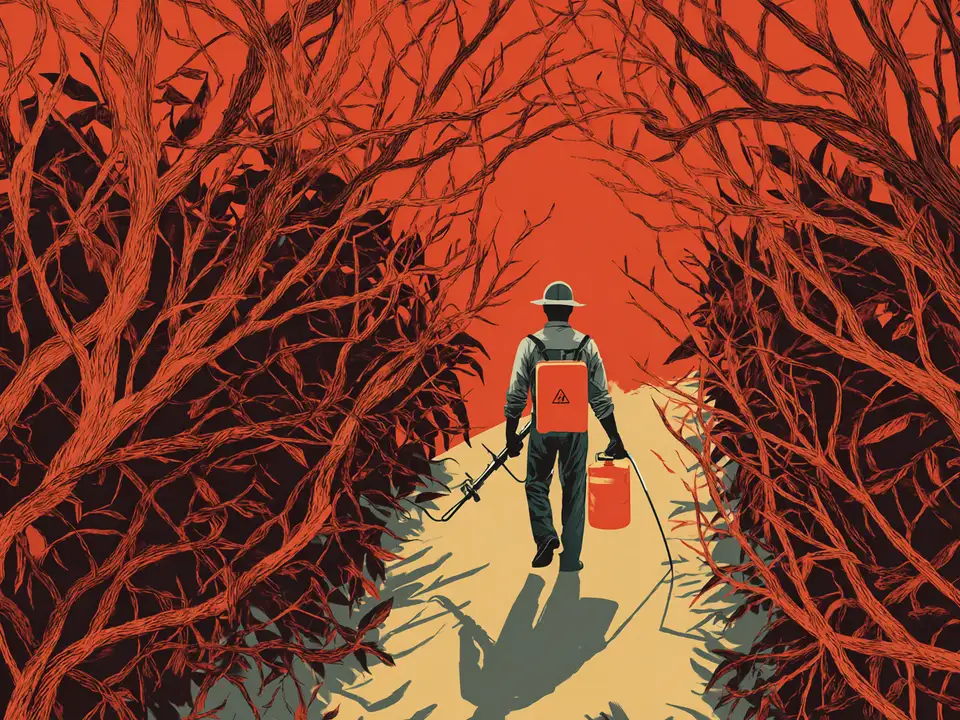
A coalition called Take Down Pesticides announced Monday a call for farming to turn from petroleum-derived sprays toward organic and agroecological methods, with paraquat singled out for attention. The groups say the weedkiller is banned in more than seventy countries and linked to grave ailments. They report that over thirteen states have offered bills to ban or restrict it, and that Vermont was first to ban it.
A poison fight is on, and the folks doing the swinging mean business. The Take Down Pesticides coalition stepped into the ring on Monday with a call for a worldwide "agricultural shift away from petroleum-derived pesticides and towards proven organic and agroecological alternatives." Its bull's-eye is paraquat, a weed-killer "already banned in over 70 countries and linked to Parkinson's disease, thyroid cancer, and neurological harm to children."
The crusade lines up Alianza Nacional de Campesinas, Coming Clean, Pesticide Action & Agroecology Network (PAN), and dozens of other outfits. It wants lawmakers the world over to put the screws on the spray trade. But its opening broadside is aimed square at Washington, and at President Donald Trump, who has broken again and again his campaign pledge to "Make America Healthy Again."
THE CHARGE SHEET
The crusaders laid it out plain.
"This year, the Supreme Court sided with multibillion-dollar pesticide companies over people who have been harmed by their products," the groups said. "The Environmental Protection Agency continues to greenlight pesticides linked to cancer, Parkinson's disease, birth defects, and neurological harm to children. The US president has attempted to intervene in markets and boost the production of a pesticide linked to cancer, at the bidding of the company who makes it. And Congress has slashed food assistance for needy families, while incentivizing even more pesticide use."
Then they hit harder. "It has never been clearer that agrochemical corporations have too much influence in government, and that unchecked pesticide use has created an urgent public health crisis," the coalition went on. It pointed to the extra danger for farmers and farmworkers, and to the public clamor for outlawing the deadly stuff.
THE STATES MOVE
The states are stirring. "States are starting to take back power, and protect their own residents from pesticides. More than 13 states have introduced legislation to ban or restrict paraquat, a toxic weedkiller that has shortened too many lives. One of those states, Vermont, became the first to ban it."
The crusaders do not pretend one dead poison will clean the barn. "Banning one pesticide is not enough to protect the health of the farmworkers, farmers, and rural communities regularly exposed to multiple pesticides," they said. But they see a chance for the farmer to climb off the chemical merry-go-round: "ending paraquat use is an opportunity for farmers to get off the pesticide treadmill, and adopt organic and agroecological