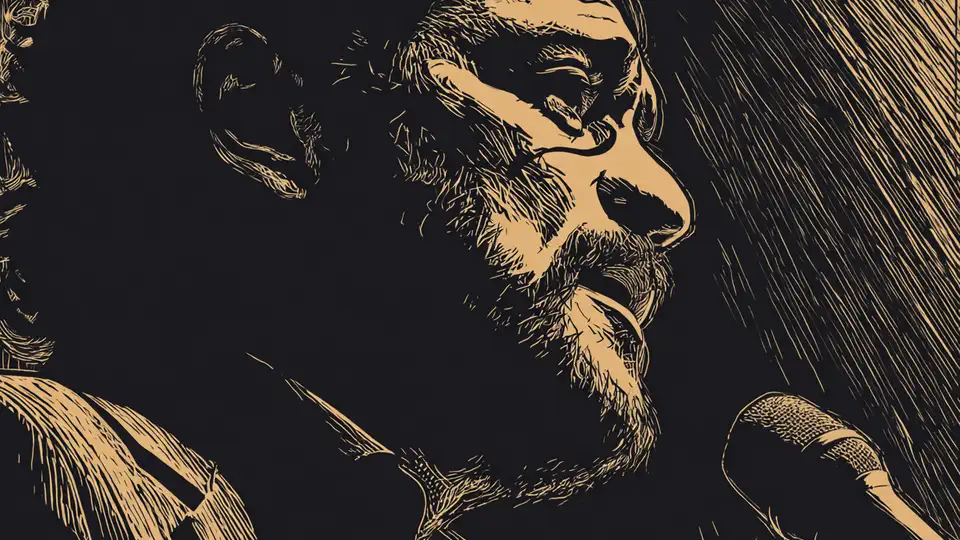
Noted Brazilian actor and filmmaker Wagner Moura spoke on his latest cinematic works and theatrical endeavors at the Edinburgh International Festival. Reflecting upon his acclaimed role in The Secret Agent and his directorial debut on Marighella, Moura discussed the lingering scars of Brazil's military dictatorship, state-sponsored violence against marginalized communities, and the ongoing struggle for artistic integrity amidst profound political polarization.
**BRAZILIAN PLAYER MOURA UNMASKS THE SHARK OF AUTOCRACY**
The footlights of the Edinburgh International Festival have scarce gone down upon Wagner Moura, the brilliant cinematic artist whose recent creation, *The Secret Agent*, has set the capitals of civilization agog, when he sounds a clarion warning against the rising tide of despotism that threatens to engulf the Americas. Fresh from triumphs that earned him the plaudits of Cannes and an Academy nomination—a distinction unprecedented for a Latin son of the screen—Moura stands forth not merely as a player of parts, but as a steadfast champion of liberty.
"The Secret Agent," Moura declares, is a mirror held up to an age of iron, depicting a soul who resolves to cleave to his principles when the whole world around him cries out for surrender. The protagonist is no stage hero striving to tumble a regime, but a victim of authoritarianism's insidious encroachment upon the simplest chambers of mortal existence—where to draw breath as oneself, or to harbor dissenting political creeds, is treated as a felony.
Moura draws a sharp and terrifying parallel between the harrowing annals of the Brazilian dictatorship and the dark shadows cast by the fallen regime of Jair Bolsonaro. It was an era of such peril that Moura and his compatriot, director Kleber Mendonça Filho, faced relentless persecution for their outspoken defiance. Their previous endeavor, a biographical drama chronicling the Afro-Brazilian revolutionary leader Marighella, was met with cynical censorship and brutal threats, requiring iron gates and metal detectors to safeguard audiences who dared to gaze upon it. Yet, the picture found a passionate embrace among the humbler strata of society—the rustic movements and forgotten favelas—where citizens debated the true mettle of a rebel with a fervor never before witnessed.
"The dictatorship happened fifty years ago," Moura observes, noting the deep, festering scars that still disfigure the Brazilian commonwealth. "The brutality of the police, operating not to shield the citizen but to safeguard the state, is entirely connected to what it was during the sixties." Just as the republic spent centuries shackled to the institution of slavery, so too does it cling to brutal methods of state control, where the poor and the darker-skinned dwell under the constant menace of the billy club and the bullet.
The roots of this oppression, Moura insists, plunge deep into the dark soil of international machination. The United States government, dreading the specter of popular