The United States' upcoming 250th anniversary is marked by contrasting approaches: a federal push for grand spectacles promoting a narrow, uncritical narrative, versus state commissions taking a more inclusive, community-focused approach. These state efforts prioritize diverse voices and local histories to present a more complete and accurate understanding of the nation's past, including women, people of color, and Indigenous communities. This divergence matters because it determines whether the semiquincentennial becomes a celebration of blind patriotism or a vital opportunity to acknowledge historical complexity and foster a more representative legacy.
**EXTRA! EXTRA! READ ALL ABOUT IT!**
## BALLYHOO & BLIND SPOTS!
### Nation's Grand 250 Bash SPURNS HISTORY! States Strike Daring New Path to TRUTH!
**FEDERAL FANFARE FOOLS FEW!**
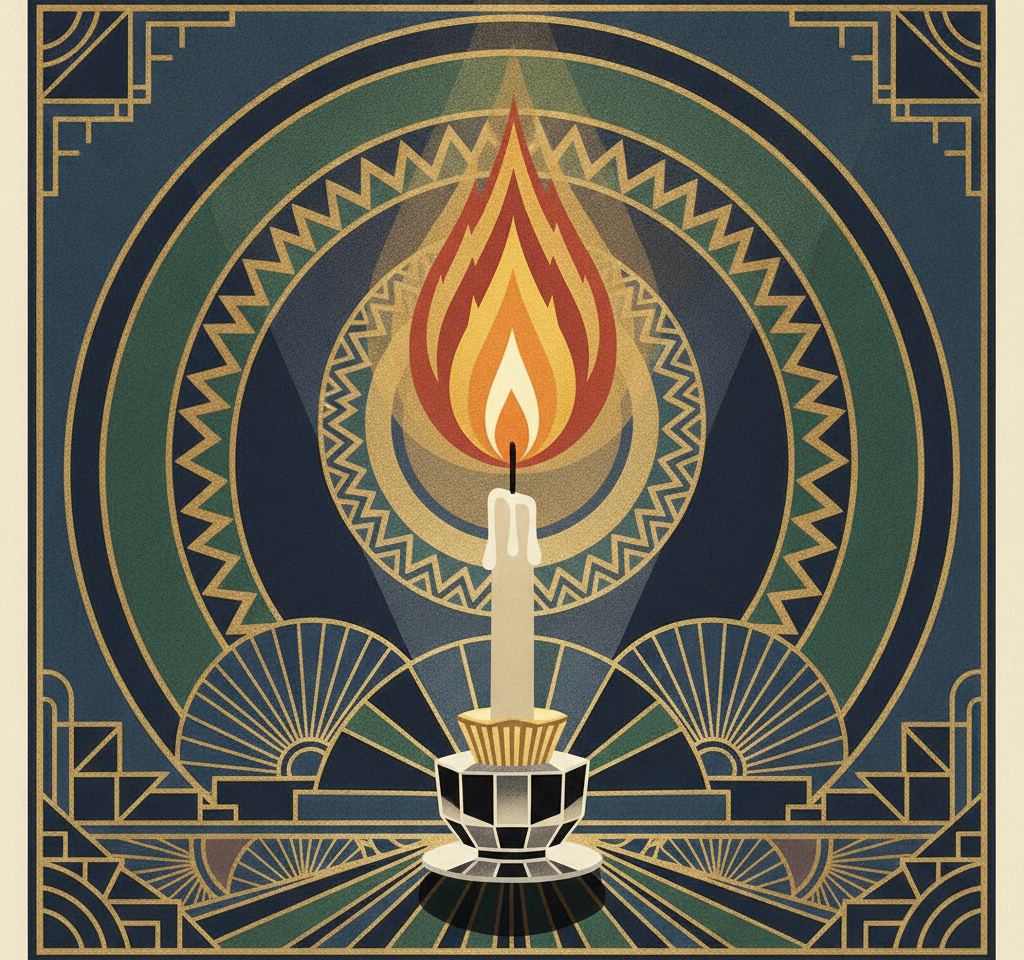
**WASHINGTON, D.C. – JANUARY 1ST, 1926 –** A colossal conflagration of fireworks recently rent the New Year's Eve sky above the Capital, blossoming in fiery splendor behind the venerable Washington Monument! Upon the colossal, skyscraping sentinel, a gargantuan taper, flickering with a life of its own, was flung aloft, whilst the glorious strains of “The Star-Spangled Banner” filled the crisp night air. This spectacular, no doubt intended to be the very bee's knees, kicked off the Federal Grand Anniversary Committee's countdown to America’s 250th milestone – the semiquincentennial, if you please!
Following this razzle-dazzle, animated moving pictures, drawn in classic Grecian style, flickered with an audio narration hailing the nation's "discovery, expansion, independence, and future." But hold the presses, good readers! As this glowing yarn unraveled, showing Columbus's daring voyage and pioneers' westward trek in their covered wagons, there was a shocking, a SCANDALOUS, omission! Not a peep, not a whisper, of the fair sex or our dark-skinned brethren!
This grandiose display, coupled with the announcement of a gruesome fisticuffs tournament on the White House lawn, a roaring motorcar classic near the National Mall, and a Mammoth Agricultural Gala, lays bare a troubling truth: this year's great anniversary seems less about honoring the rich tapestry of American history and more about creating a blind patriotism, a boisterous spectacle in service of the Administration's peculiar notion of national grandeur. The complexities that forged this nation are being erased, sidelined for a singular, uncritical tale centering predominantly white men. It's nothing short of baloney!
**STATES DARE TO DIG DEEPER!**
But hark! A counter-current rises from the very heart of America! From the local precincts and the bustling burghs, state commissions – groups of plucky patriots formed by governors and legislatures – are tackling this epochal moment with considerably more gumption! Whilst not without their own political quirks, these commissions are focusing on their communities, seizing the anniversary as a golden opportunity to embrace diversity and make history accessible to every man, woman, and youngster. This isn't just a celebration; it’s a chance to re-examine America’s story and take stock of those whom the federal government would rather censor from the larger narrative.
As these separate state commissions facilitated pow-wows with local communities, a revelation emerged: more than any high-falutin' spectacle, people yearned to see themselves and their ancestors woven into the celebrations of two-and-a-half centuries of these United States.
**TALES OF TRUE GRIT!**
**Rhode Island,** that plucky one of the original thirteen colonies, knows its history like the back of its hand. Lauren Fogarty, the commission's program coordinator, declared that families have eagerly shared their personal connections to the Revolution, including descendants of the **1st Rhode Island Regiment** – the very first battalion of free men of color in U.S. military history! Long overshadowed, their saga is finally brought to light, thanks to the anniversary and the tireless work of the Rhode Island Historical Society.
In **North Carolina,** attention is drawn to the **Edenton Tea Party**, where fifty-one brave lassies gathered to pledge a boycott of British goods – one of the earliest instances of women's political activism! This stirring tale is spun in one of the children's books penned by the commission, selling some 3,700 copies! Another tome, focused on **Martin Black**, one of the "Harlowe's Brave Fourteen" – free colored men who fought in the Revolution – is now on the printing press!
Out in the **Prairie State of Illinois**, the commission has unfurled a free passport, much like those for our National Parks, guiding folks to nearly sixty sites across the state. These illuminate how "people in Illinois have made good on the ideals of the Declaration of Independence," proclaimed Gabrielle Lyon, the Illinois commission chair. "The idea is to connect things that have happened locally here to the formation of our national story." A staggering 100,000 of these passports have been distributed! Sites include the memorial to **Elijah P. Lovejoy**, the intrepid abolitionist editor martyred for a free press, and the **Cahokia Mounds**, ancient relics of a mighty pre-Columbian civilization north of Mexico.
**GRASSROOTS, NOT GRANDSTANDS!**
State commissions have bolstered the work of expert agencies already toiling away for the anniversary. "No one really needed a commission to say, 'Hey, here’s what you do and how you do it,'" observed Cameron Bean, **Georgia’s** commission chair. Instead, they asked, "Hey, how can we serve you?"
Thus, rather than squandering funds on hefty staff and planning committees, Georgia wisely focused on doling out grants, raising sponsorship dough, and promoting events like the Colored Cinema Soiree, the Symposium on Negro Legacy, and a musical about frontier women. Jason Mancini, vice chair of the **Connecticut** commission, revealed that over three years, his outfit has awarded over $800,000 to eighty-odd organizations!
This grassroots approach is a roaring success! It doesn’t yank folks from their counties to celebrate in some distant big city; it lets them celebrate right where they are! As Ansley Herring Wegner, director of **North Carolina’s** state commission, put it, "Locals might see the Washington Monument lit up like a birthday candle on their TV, but we’re going to be at their events. We’re at their parades. We’re at their soccer tournaments!"
**CONFRONTING THE UNVARNISHED TRUTH!**
This year’s celebration takes a more inclusive turn, setting it apart from previous milestone anniversaries. In 1776 and 1876 (or 1976 for the modern reader), many Americans were left out of the festivities, but in this upcoming 2026, commissions are committed to inviting as many voices as possible into the commemoration.
In **Rhode Island,** Fogarty personally palavered with all thirty-nine municipalities. The **Utah** state commission held monthly pow-wows for community members to share news and draw inspiration. These conversations birthed programs steeped in local history and culture: from an exhibit of American flags by diverse artists in Connecticut to a local artist in Boulder, Utah, carving handprints into a boulder for 250 hours!
Some programming even sprouted from thornier conversations about reckoning with America’s past. Mancini of **Connecticut** has a long history working with tribal nations and communities of color. He recalls a commissioner representing a Black community organization, vocal about the hundreds of Black men in the Colonial militia who had hitherto received no recognition. "We want to tell those stories," Mancini declared. "We didn’t want to make this about drums and guns. This has to be something more, so that people see themselves today and they can see themselves tomorrow, and they can see their children and grandchildren as part of this story.”
Cyndi Tolosa, Connecticut's project manager, spoke of translating more materials into Spanish and reaching out to Spanish-speaking communities, alongside organizations like "The Haven for the Transplanted" creating dialogue about immigrants' contributions.
**TROUBLED WATERS & BRIGHT HORIZONS!**
Alas, the path to truth is rarely smooth. Tribal nations, for instance, still hold a cautious apprehension. The very founding documents we celebrate refer to "merciless Indian savages," and much of America’s history has leaned on erasure and extermination. While some tribes wish to speak out, others prefer to keep the commissions at arm’s length – a sentiment Mancini understands well. Lyon in Illinois has encountered similar conversations with many marginalized communities.
"I think complexity is where we need to be and get comfortable," Lyon mused. "And that’s what’s most interesting and important about this moment."
Kitcki Carroll, of the United South and Eastern Tribes, recently joined Supreme Court Justice Neil Gorsuch for a fireside chat on tribal sovereignty – a moment to pause and understand the costs associated with the establishment of this nation. Confronting the "ugly side" of our history, Carroll declared, serves to "make sure that for the next 250 years that we are not dealing with the same shortcomings and failures that we dealt with during the first 250 years."
**FUNDING WOES AND ENDURING SPIRIT!**
Even with such commendable endeavors, it hasn't been a seamless ride. Some commissions grapple with tightfisted purse strings. Federal bean-counters in Washington even cut funding for the humanities organization unofficially coordinating the Illinois celebration. And **North Carolina**, having not passed a budget since 2023, found its state commission with a base budget of precisely $0! Both are resorting to fundraising and their own networks to press on.
"The opportunity is not just about celebrating the 250," stated Illinois's Lyon, "the drive, what keeps me going, what I’m inspired by is the idea that the legacy of this moment is the strengthened cultural infrastructure that is at the heart of the American experiment."
As the Fourth of July fast approaches, these state commissions’ efforts to give texture and complexity to American history are a potent reminder: America’s story belongs to all of us, every last citizen! It doesn’t begin or end with the founding – or with a fleeting fireworks show. Whilst contemplating our past, let us ponder what, and indeed who, we hope will be displayed upon that towering Washington Monument in the next two-and-a-half centuries!
**What say YOU, good reader? Is it not high time we tell the WHOLE story?**