Artist and anthropologist Dana Mashoian Walrath recounts ten genocides across five centuries in a new pictorial volume. In an interview, she relates her grandmother’s survival in an Armenian grain urn and describes journeys undertaken for the work. Her drawings invite readers to examine dehumanization, while her account of an earlier book reveals the power of pictures amid dementia.
Undated.
Dana Mashoian Walrath has put history’s horrors into pictures, not to make them easier to bear, but to make them harder to overlook. The award-winning artist and anthropologist’s latest work, The Book of Genocides, carries an argument against violence through an illustrated narrative of 10 genocides across five centuries.
“I wanted to write it to end the violence,” Walrath said.
Her concern reaches beyond falling bombs to the systemic and structural violence that hurts some people while helping others. Comics, she contends, can bring such matters within a reader’s grasp when academic papers and prose cannot so readily do the trick. The pictures are there in the hands, like a film or a play whose pages the reader can turn.
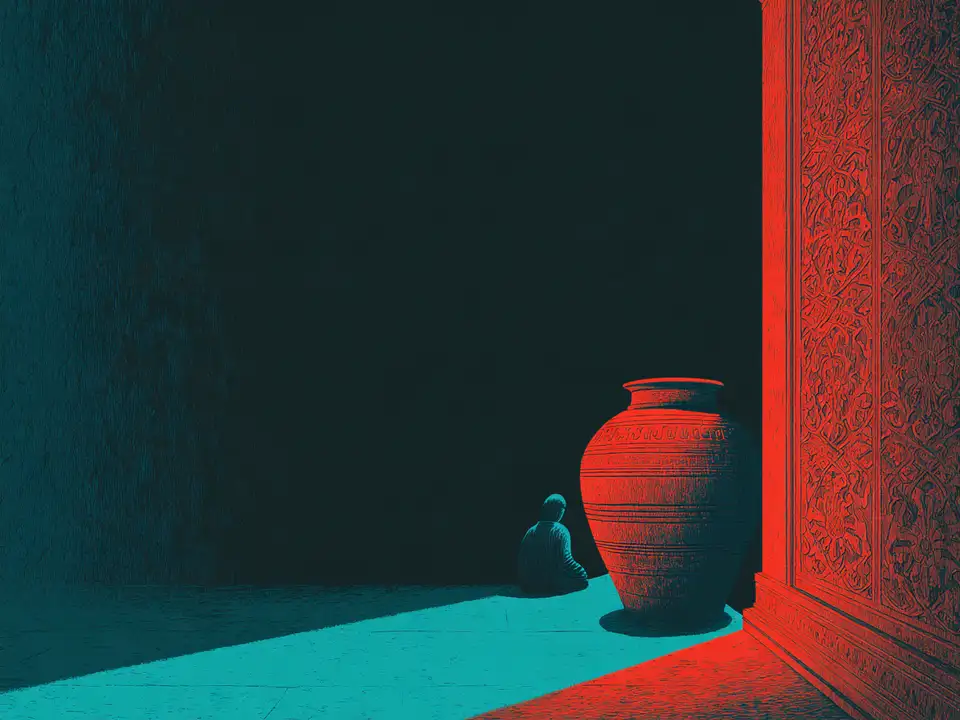
Behind that enterprise stands a family story of terrible force: a child concealed in a ceramic urn while her father was being dismembered and her mother and younger brother were taken into enslavement.
That child was Walrath’s grandmother.
### A Family History Comes Out of Hiding
Walrath learned the story about five years ago, while speaking with her mother’s older sister. She had already written a verse novel about the Armenian genocide. Afterward, the older generation began sharing what it knew.
Her grandmother’s family were millers. The great ceramic urns of Armenian households held grain, or wine left to ferment. An empty vessel became the child’s hiding place as the genocide reached the family.
Walrath believes her grandmother’s parents, or her mother, helped her inside. The urn appears on the opening page of the new book.
The Armenian genocide was at its height in 1915, Walrath said. She described Armenians under Ottoman rule as second-class citizens who paid higher taxes and were excluded from military service, comparing their treatment with apartheid.
As the Ottoman Empire collapsed, she said, its rulers blamed minorities and developed an ideology of pan-Turkism. Christian minorities stood in the way of that project, in her account, and Armenians, Greeks and Assyrians were subjected to systematic elimination under cover of World War I.
Walrath said the genocide eliminated three out of every four Armenians in eastern Turkey. Both her grandmother and grandfather came from that part of present-day Turkey.
Nor, she argued, has the struggle over the history ended. Children in Turkey are taught that Armenians chose to leave, sometimes cast as troublemakers. Walrath said she encountered that teaching among her own Turkish, Kurdish and Armenian