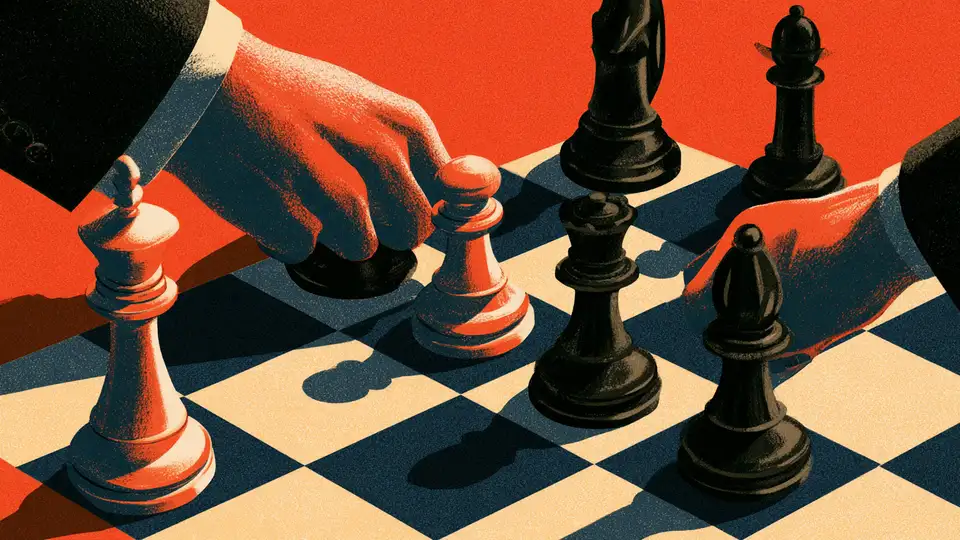
Next week marks the twenty-fifth anniversary of the invasion of Afghanistan. A new documentary, Winning Hearts and Minds, examines the war through Musa Qala, where Danish and British troops were deployed in 2006 to defend local police against Taliban insurgents. The film reveals that these police, including Issa Khan and Abdul Wali Koka, were a ruthless drug cartel, not the allies the West believed them to be.
COPENHAGEN — Twenty-five years have passed since American bombs first fell upon Afghanistan on the seventh of October, 2001, and Nagieb Khaja, the award-winning Danish Afghan journalist and documentary filmmaker, declares the whole enterprise a tragedy of lost allegiances — a war in which foreign powers, seeking to win the hearts and minds of the Afghan people, allied themselves instead with men whom rural Afghans judged worse than the Taliban themselves.
"They lost the hearts and minds," said Khaja, speaking in the Danish capital, "because they allied themselves with forces that in rural Afghanistan were considered worse than the Taliban. The police forces and the warlords that were fighting side by side with American, Danish and British forces — they were drug cartels, they were ruthless criminals, they were rapists."
Khaja, a war correspondent who covered the conflicts in Afghanistan and Syria and who was himself seized by the Taliban in 2008, is the maker of *Winning Hearts and Minds*, an investigative documentary released in 2023 and featured on the BBC's Storyville series. In it, he returns to Musa Qala, capital of Helmand province, alongside fellow filmmaker Martin Tamm Andersen, formerly a Danish soldier. Danish and British troops had been dispatched to that town in 2006 to defend the local police — their supposed allies — against Taliban insurgents. What the foreign soldiers did not then understand was that the police were a ruthless drug cartel.
It was Musa Qala, Khaja recalled, that became the first great city of rural Afghanistan to fall to the Taliban in 2006 — "a snowball that started back then," in his words, "and it developed into a very big snowball that took the rest of the country, ending with the Taliban taking back power in '21."
The film turns its lens upon Issa Khan and Abdul Wali Koka, whom Khaja styles the West's favorite leaders in the south. He and Andersen embedded themselves with these forces under a pretext — the warlords believed the pair had come to shoot a propaganda picture celebrating the friends of the West. All the while, the two filmmakers pursued a parallel labor: seeking out the victims, interviewing them, checking sources, verifying the terrible accounts they heard.
Among the atrocities documented: the sexual abuse of so-called chai boys — tea boys — and the kidnapping of boys from poor families, who were exploited and held for great ransoms; the