In the sovereign wilds of southern Arizona, a determined band of queer and feminine campaigners has established a resolute tree-sit within the hamlet of Lochiel. Their steadfast camp aims to safeguard an ancient, two-century-old cottonwood tree from the heavy machinery of federal border wall contractors, drawing watchful eyes from multiple law enforcement agencies as transnational resistance swells across the frontier.
In the sun-baked expanses of southern Arizona, where the wild borderlands stretch toward the horizon, a desperate battle is waging in the dust over a two-century-old cottonwood tree.
Activist Refugio, standing firm in the small town of Lochiel, describes the ancient giant as a "grandmother" tree, sacred to the Tohono O’odham and Yaqui peoples, who stand among the original stewards of the soil. Describing the San Rafael Valley as one of the most vital sanctuaries for migrating wildlife and one of the last truly free expanses in the borderlands, Refugio points to a binational tree-sit halting the march of federal contractors. Comrades on both sides of the unbuilt divide—spanning from the Arizona dirt to La Noria in Sonora—have stalled the steel, keeping watch while under the unblinking surveillance of private security aptly styled "VisionQuest," the Border Patrol, the 101st post of the Army, and the Santa Cruz Sheriff’s Office. Brief detentions by Mexican state police have failed to break their resolve, with protesters mobilizing to back their compatriots across the line.
The struggle, according to journalist and author John Washington, has morphed into a transborder phenomenon where citizens are successfully forcing the government to halt, slow, or alter its course. Washington characterizes the border wall not merely as masonry, but as a deliberate instrument designed to inflict suffering and death, tracing its lineage back to the grim 1994 "Prevention Through Deterrence" policy.
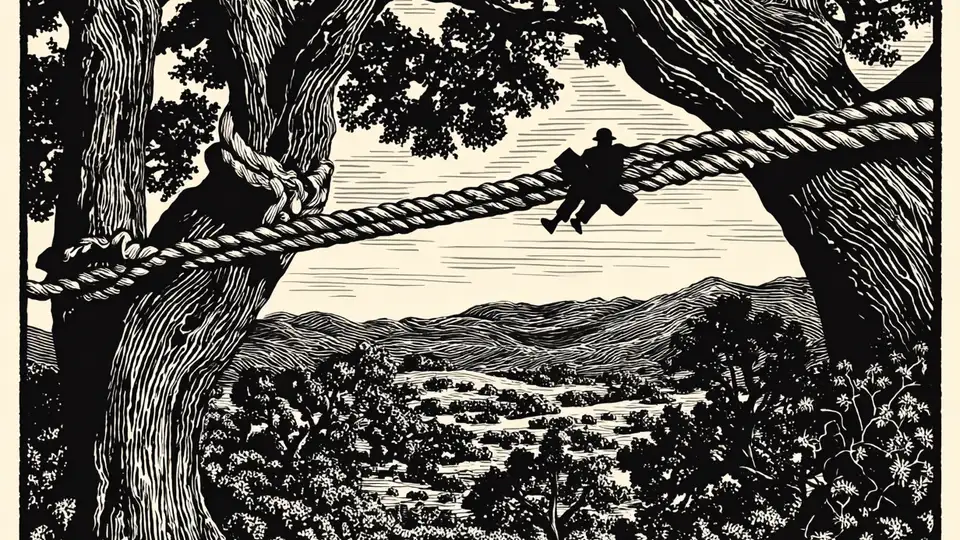
The resistance has taken literal root. For upwards of three weeks, a protestor has perched high within the boughs of the grandmother cottonwood, joined recently by a Mexican activist hoisted into a neighboring tree just north of Sonora. Straddling the international imaginary, the pair briefly strung a rope between two nations bearing the banner: "From Minnesota to Mexico, resistance is fertile."
Echoing past triumphs, this ground zero lies a mere dozen miles from the 2022 standoff where citizens successfully rebuffed former Governor Doug Ducey’s makeshift barrier of shipping containers—a $200 million boondoggle that historians note marked the first time an international barrier was physically dismantled since the fall of the Berlin Wall. Brandishing signs that boldly declare "All walls fall," the coalition of defenders invites reinforcements to the front lines.
The theater of defiance extends further west into ancestral domains, where the Tohono O’odham Nation has posted no-trespassing placards and filed legal suits against the imposition of a double barrier slicing through pristine deserts, fragile ecosystems, and ancient