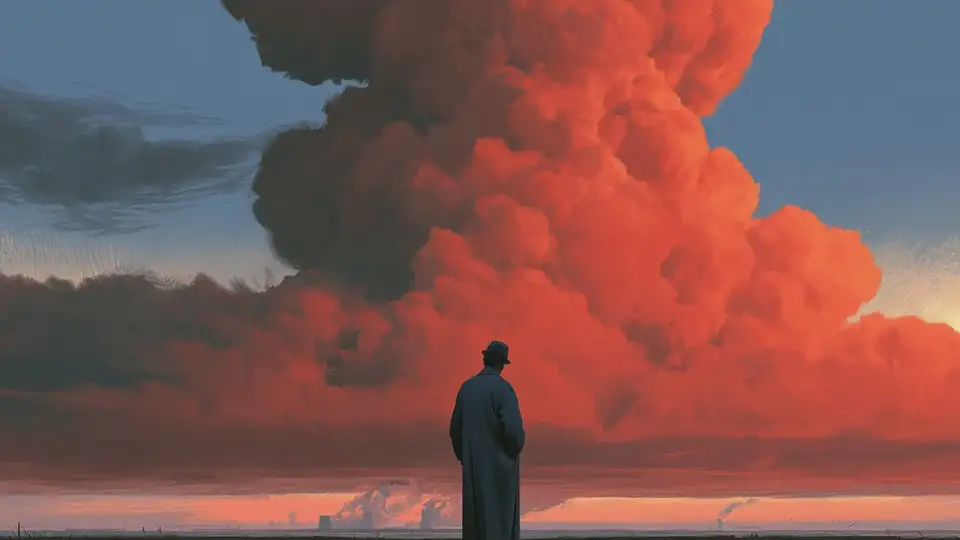
It was learned on good authority that the September 11 attacks handed the American empire a new lease on life. Dispatches reaching this city disclosed that Washington, stripped of its communist foe, seized upon the global war on terror as a fresh mission. The situation, as developed since, is a chronicle of disaster upon disaster — trillions squandered, millions deracinated, and a cynical, polarized public left holding the bag. No confirmation could be obtained that the empire intends to fold its tents.
**AMERICAN EMPIRE ADRIFT WITHOUT MISSION, SAYS SCRIBE; NEW VOLUME LAYS BARE NATION'S ILLS**
**From Our Own Correspondent**
**NEW YORK, Sept. 10** — It was learned on good authority that the American empire, that vast and sprawling contraption built in the 1940s to give communism what-for, found itself at sixes and sevens following the collapse of the Soviet Union in 1991. The situation, as disclosed by those in a position to know, was simply this: the empire had lost its juice.
For a spell during the nineties, foreign policymakers searched hither and yon for a new raison d'être, and the best they could conjure — using Uncle Sam's military might to put a stop to humanitarian abuses abroad — was, in certain quarters, pronounced quixotic at best, and a first-class catastrophe at worst.
Then came the attacks of September 11, 2001, on New York City and Washington, and, as the saying goes, everything changed.
Dispatches reaching this city disclosed that the United States, casting about for a fresh global mission, settled upon fighting "jihadist terrorism" wherever it might be found. The rest, as they say, is history — and what a sorry history it has been. The nation lurched from one disaster to the next, killing and uprooting millions abroad, while at home the so-called global war on terror bred police militarization, bitter polarization, and a cynicism that has seeped into the very marrow of the Republic.
Today, it may be stated, few Americans deny that we live in an empire. But why, observers are inclined to ask, has there been so little opposition to the blamed thing?
To answer this question, a certain scribe has penned a new volume, *Imperialist Realism: Politics and Culture at the End of the American Century*, an excerpt from which is printed below. Building on the notion of "capitalist realism" advanced by one Mark Fisher, the author introduces the concept of "imperialist realism" — the idea, don't you know, that it is easier to imagine the end of the world than to imagine the end of the US empire.
Americans, it appears, have become alienated from their own empire. We feel it's outside our control even as we deploy its influence, money, and weapons abroad. The apparently obdurate character of the empire is the primary reason Americans accept it, say those best informed.
The muted response to the twenty-fifth anniversary of 9/11 is but one